

Which Latin Dance to Learn First: A Beginner’s Guide
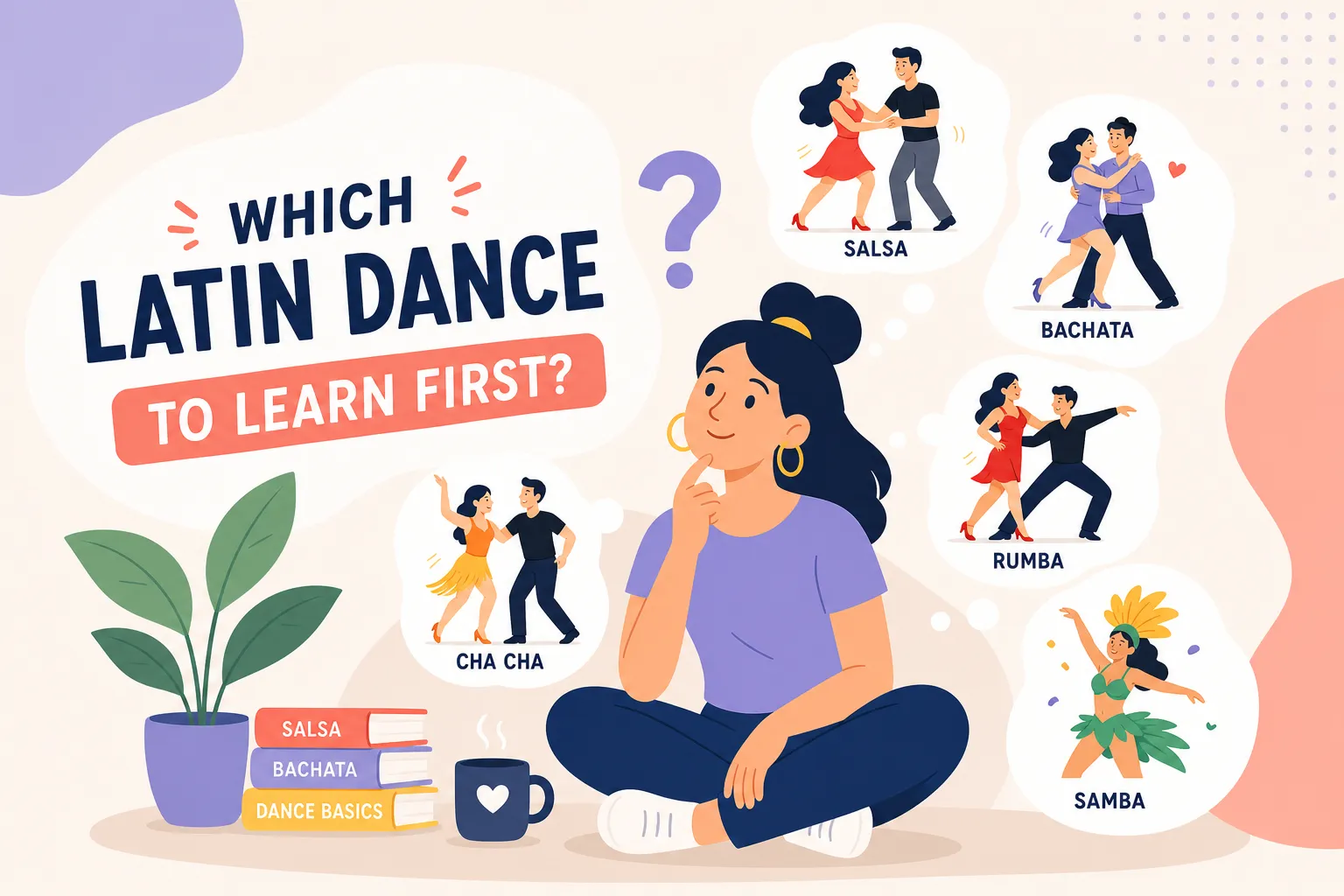
If you’ve ever wondered which Latin dance to learn first, you’re not alone, and you’re asking exactly the right question. You’ve probably found yourself standing at the edge of a Latin social night, watching the dance floor with a mix of genuine fascination and mild panic. The music is incredible. The dancers look effortless. And somewhere in the back of your mind, a very reasonable question forms: where on earth does a beginner even start?
It’s the question our instructors at Salsa Suave Dance Studio hear more than any other. It gets whispered just before a first lesson, or typed into Google at eleven-thirty at night when the curiosity finally tips over into action. And it’s a great question, because the honest answer isn’t “just pick one.” It’s “pick the right one for you.” There are real differences between styles, in tempo, counting, and partner connection, and those differences matter, especially in the early weeks when motivation is everything.
By the end of this guide, you’ll have a clear answer matched to your own goals, a realistic sense of how long each style takes to learn, and a practical first step to get you on the floor.
A quick look at the four main Latin styles
Think of this as the menu before you order. Each style has its own personality, tempo, and learning curve. Here’s an honest snapshot of each one.
Salsa: fast, social, and everywhere
Salsa is lively, upbeat, and high-energy, with music that typically ranges quite broadly depending on style, from around 90 bpm in slower arrangements up to 250 bpm in faster performance settings, though most social salsa nights sit comfortably in a mid-range tempo that feels energetic without being frantic. The rhythm runs across an eight-count phrase, with steps landing on beats 1-2-3 and 5-6-7, and pauses on 4 and 8. Those pauses are what trip up most beginners at first, but once you hear them, you can’t unhear them. Salsa is the most widely danced Latin style at social nights across Sydney, Melbourne, and Brisbane, which means learning it opens more doors than any other style on this list.
Bachata: smoother, slower, and more forgiving
Bachata feels intimate and melodic, grounded in a way that salsa isn’t. The tempo in most social settings tends to sit somewhere around 108 to 150 beats per minute, and the basic pattern is beautifully simple: step-step-step-tap over four beats, usually moving side to side, with a hip accent on the fourth beat. That tap, that little accent, is what gives bachata its character. It’s commonly recommended as one of the most beginner-accessible Latin styles alongside merengue, and it’s enormously popular at Sydney Latin socials right alongside salsa.
Cha-cha: playful, punchy, and rhythmically satisfying
Cha-cha is lively but structured, sitting at a pace slower than salsa with a distinctive syncopation that gives it a cheeky, playful personality. The basic sequence, step-step-cha-cha-cha, is memorable once your ear locks onto it. It’s a wonderful choice for anyone who loves music with a clear, fun beat and wants footwork that feels genuinely distinct from the other styles.
Mambo: bold, jazzy, and a touch more advanced
Mambo is driven and sharp, rooted in Afro-Cuban and jazz influences, and noticeably more dynamic than bachata. The timing differs from salsa in a meaningful way for beginners: where salsa often starts the break step on beat 1, mambo typically starts on beat 2, which sounds like a small difference but feels significant when you’re new. Mambo is often considered more challenging for beginners than the other three styles, largely because of this timing difference, so it suits dancers who already have some rhythm awareness, or those who actively want a challenge from the start. The music is extraordinary, and the cultural story behind it is rich.
Which Latin dance to learn first: matching your goals and personality
This is where the decision gets personal. The right first dance isn’t the objectively “best” one. It’s the one that matches what you actually want from the experience.
If your goal is to social dance as quickly as possible
Bachata wins for most complete beginners. The counting is simpler, the tempo is more forgiving, and the basic pattern feels natural within a few weeks of consistent practice. Salsa is the other strong pick precisely because of its social dominance: the more venues you can dance at, the faster your skills build through real-world repetition. It’s also worth knowing about merengue, often described as the training wheels of Latin dance. Merengue offers one step per beat, minimal counting, and an almost immediate sense of confidence. If you want to feel like you can move on a dance floor very quickly, merengue is typically the fastest style for beginners to pick up, making it a genuinely useful starting point before you commit to salsa or bachata.
If connection and dancing with a partner matter most to you
Bachata’s close embrace and slower tempo make it ideal for people who want to feel the music together with a partner, rather than execute fast footwork independently. The style rewards connection over precision, which is a refreshing thing for a beginner to hear. Cha-cha is a strong second option for couples who enjoy playful, call-and-response partner work with a bit more bounce in it.
If you’re driven by music and want to express rhythm
Salsa’s musical world is genuinely complex, layered with percussion elements like the clave, conga tumbao, and timbales, phrasing that rewards people who love listening carefully to what they’re dancing to. If you catch yourself nodding along to a song and wanting to move with every instrument in it, salsa will give you more to work with as you progress. Cha-cha suits dancers who love a beat they can count clearly and feel right through their feet.
If fitness and cardio are part of the motivation
Salsa is generally considered the most physically demanding of the four styles for beginners, given its pace and the footwork complexity that builds over time. Mambo places similar physical demands on the body, though beginners will spend more of their early lessons building the rhythmic foundation before the cardio benefits really kick in.
Salsa vs Bachata first: how long before you’re ready for a social dance night?
One of the most common reasons beginners quit is that the timeline surprises them. They expect to feel confident after three lessons and then feel deflated when they don’t. Here’s an honest, encouraging breakdown of what to expect from each style.
- Bachata: most beginners feel socially confident within four to eight weeks with two sessions per week.
- Salsa: eight to twelve weeksis a common milestone for social readiness, though feeling genuinely comfortable on a busy floor tends to take closer to three to six months.
- Cha-cha: cha-cha follows a similar timeline to salsa; the syncopated rhythm takes a few extra weeks to internalise compared to bachata’s more straightforward count.
- Mambo: plan for three to six months before social dancing feels enjoyable rather than stressful. That’s not a discouragement, it’s just an honest expectation to set.
These timelines assume consistent practice between lessons, not just showing up to class once a week. Frequency matters more than session length. Fifteen minutes of running the basic step to music while cooking dinner, three or four times a week, adds up faster than you’d think. It’s not glamorous advice, but it’s the truest kind. Think of it as an instructor tip rather than a hard rule: small, regular repetition builds muscle memory far more efficiently than longer, infrequent sessions.
The shortcut most beginners overlook is private tuition. Private lessons often accelerate the correction of timing issues in ways that group classes simply can’t match, this is especially true for salsa and mambo, where rhythm complexity is the main barrier for most new dancers. A skilled instructor can hear exactly where your timing breaks and address it on the spot, rather than leaving you to practise a mistake until it becomes a habit.
Where these dances come alive in Sydney
Learning a dance is more motivating when you can see exactly where you’ll use it. Sydney has a genuinely active and well-attended Latin social scene, and knowing what you’re working toward makes the early lessons feel purposeful.
Salsa and bachata are the dominant styles at Sydney’s Latin dance nights, with regular weekly events running across the CBD and inner suburbs. A typical social night mixes both styles across the evening, which is why having salsa as your primary style and some bachata basics in your back pocket puts a beginner in the best position to enjoy a full night out. Several inner-city suburbs, including Surry Hills, Newtown, Pyrmont, and the Eastern Suburbs, host regular socials, so there’s rarely a shortage of opportunities to practise once you’ve built a foundation.
Both salsa and bachata also have strong global communities, which means the skills you build in Sydney travel with you. You can social dance in Melbourne, Brisbane, or anywhere in the world with the same fundamental vocabulary. Cha-cha and mambo tend to appear more frequently in class settings and competitions than at casual social nights, which is worth factoring into your decision if social dancing is your primary goal.
Group class or private lesson: which works better for beginners?
Knowing which Latin dance to learn first is only half the decision. The other half is choosing how to learn it.
The case for starting in a group class
Group classes are lower pressure, more affordable, and give beginners the experience of dancing with multiple partners from day one. There’s something genuinely reassuring about watching twelve other people make exactly the same mistake you just made. It normalises the learning curve and takes the performance anxiety down a notch. Group classes are best suited to people who want to absorb the basics, meet other dancers, and build confidence gradually in a social setting.
When private tuition changes everything
Private lessons allow an instructor to diagnose exactly where your timing or technique breaks down, something that’s simply impossible to do in a class of twelve people moving at once. For salsa and mambo especially, a single private session can unlock what weeks of group classes haven’t. Private tuition is best suited to people with a specific goal: a wedding dance, an upcoming social event, or a genuine desire to progress quickly. It’s also a far better fit for anyone who feels shy about making mistakes in a group setting, because there’s no audience and no comparison. For Wedding Dance Lessons best to do private lessons and specifically focus on your First Bridal dance.
At Salsa Suave Dance Studio, private lessons are available seven days a week, with flexible packages ranging from a single casual lesson through to longer programmes. Couples can learn together under one booking, which makes it genuine value when you want to progress as a pair. Check our website for current availability and pricing details.
Which dance to learn first: try before you commit
Reading about Latin dance styles gets you only so far. The real answer to which Latin dance you should learn first becomes obvious the moment you actually try one. The footwork that looks intimidating in a video often feels surprisingly manageable when you’re doing it in a room with a good instructor. And sometimes the style you were convinced you’d love turns out to be less of a fit than the one you hadn’t considered.
The most practical approach is to sample two styles before committing to a full programme. Try salsa one week, bachata the next, and notice which one makes you want to keep going. At Salsa Suave Dance Studio in Sydney’s CBD, beginners can do exactly that across multiple styles before choosing a learning path that genuinely fits their goals and personality. There’s no pressure to decide on day one.
The right style is simply the one you’ll actually practise. That’s the whole equation.
Your next step starts on the floor
Remember that feeling from the beginning of this article: standing at the edge of a dance floor, watching with a mix of wonder and mild overwhelm? The decision in front of you is actually much smaller than it felt then. It’s not “which Latin dance is best.” It’s “which Latin dance suits me right now.”
Here’s the short version if you need it. Choose bachata for the fastest path to social confidence, it’s one of the easiest Latin dances to learn and a favourite recommendation for complete beginners. Choose salsa for the widest range of social opportunities across Sydney and beyond. Choose cha-cha if you love a playful, clearly structured rhythm. Choose mambo when you’re ready for a genuine challenge and want to invest in something deeper.
Whichever style you pick, the most important thing is just starting. The answer to which Latin dance to learn first is always the same: the one that gets you on the floor. If you’re based in Sydney and want to try a lesson before committing to anything, our team at Salsa Suave Dance Studio at 262 Pitt Street in the CBD would love to help you find your fit, we’re one block from Town Hall Station and open seven days a week. Book a trial class this week and come and find out which style is yours.
 CALL US1300 724 442
EMAIL US info@salsasuave.com.au
VISIT US::

