

First dance choreography: a simple guide for couples
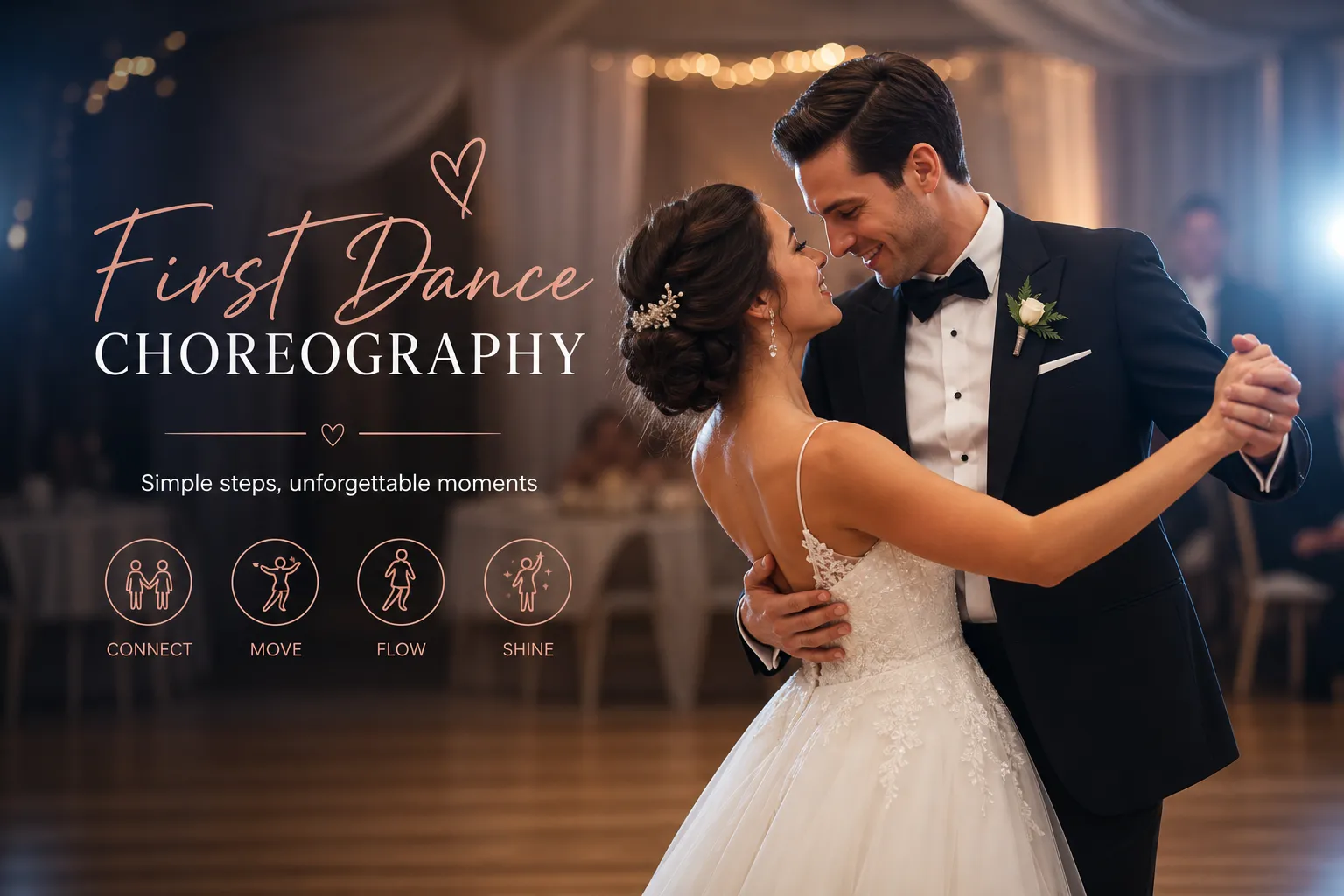
Picture this: the music starts, every single guest turns to look at you, and your mind goes completely blank. Your hands are clammy. Your partner is gripping you a little too tight. And somewhere between the appetisers and the main course, you’ve forgotten what your own feet are supposed to do.
Many couples report feeling nervous before their first dance, and if that sounds familiar, you’re in very good company. Planning your first dance choreography doesn’t require competitive training, a choreography background, or even a naturally graceful body. It requires a plan, a song you actually love, and enough practice to feel calm rather than terrified when the spotlight finds you.
Fernando Providel, lead instructor at Salsa Suave Dance Studio in Sydney’s CBD, has coached couples through exactly this process. The framework in this guide draws on his extensive experience helping complete non-dancers become people who enjoy their first dance moment. By the end, you’ll know how to choose a song, match it to a dance style, build a 60, 90 second routine with real structure, follow a realistic practice schedule, and decide whether to go it alone or bring in a professional.
Choose the right song before you plan a single step
Before any first dance choreography can begin, the song has to come first. The tempo, time signature, and emotional arc of your chosen track shape every decision that follows, so getting this right is the single most important step in the entire process.
Most wedding songs run between three and four minutes, but 60, 90 seconds is the ideal target for a choreographed first dance. It’s long enough to feel complete and short enough to keep every guest’s attention from start to finish. In practical terms, that usually means dancing through the first verse and chorus, then signalling to your DJ to fade the track cleanly. Ask your DJ in advance whether they can do this. A clean fade at your requested point is something many experienced DJs can accommodate, just confirm the timing when you brief them.
Understanding tempo doesn’t require a music degree. Most popular songs are in 4/4 time, meaning you count to four repeatedly as the song plays. Songs in 3/4 time, like “Can’t Help Falling in Love,” count to three instead, that’s the waltz rhythm. As a rough guide, slower songs tend to sit around 60, 80 beats per minute, while moderate-tempo songs land between 80, 100 BPM. If you can sway gently and count “one, two, three, four” without rushing, your song is in a comfortable range for beginner first dance steps.
For 2026, the songs working beautifully for choreographed first dances include timeless choices like “Perfect” by Ed Sheeran, “A Thousand Years” by Christina Perri, “At Last” by Etta James, “Can’t Help Falling in Love,” and “Thinking Out Loud.” Among the current trending options, “Die With a Smile” by Lady Gaga and Bruno Mars offers a lush, emotionally complete opening 90 seconds, and “Ordinary” by Alex Warren has become one of the most talked-about first dance songs of the year. That said, the most important quality any song can have is personal significance. A meaningful song that genuinely moves you both will always outperform a trendy pick that leaves you cold. If you need inspiration for your shortlist, resources with curated selections of classic first dance songs and local guides to great first dance songs can be useful starting points.
Simple first dance choreography: match song and style
Once the song is locked in, choosing a dance style becomes much more straightforward than most couples expect. The tempo and time signature of your song do most of the work for you.
The waltz suits slow, flowing songs in 3/4 time and naturally creates an elegant, romantic feeling. The social foxtrot works beautifully with the majority of modern pop ballads in 4/4 time, offering a smooth, gliding quality that feels polished without being stiff. Bachata, a warm Latin style originally from the Dominican Republic, has become a popular choice for many couples because it feels intimate and joyful rather than formal. It’s also considerably easier for complete beginners to pick up than salsa, with a more moderate tempo of around 130, 140 BPM compared to salsa and a simple step-tap pattern. If you’re curious about getting started, a dedicated Beginners Salsa Dancing Course can make the basics click quickly. Salsa works brilliantly for couples with a more playful dynamic and a song with a stronger, more rhythmic beat.
Fernando Providel observes that Latin styles have grown in popularity at Australian weddings because they help couples develop something invaluable very quickly: a sense of connection with each other on the dance floor. That connection, rather than technical perfection, is what guests actually see and remember.
When you’re choosing between styles, think about how you want to feel during those 90 seconds. Intimate and romantic? Bachata or waltz. Fun and energetic? Salsa or a lively foxtrot. Classic and elegant? A slow foxtrot or waltz is your answer. The best dance style is always the one you’ll both enjoy practising, because you’re going to be doing a lot of that.
First dance choreography structure (60, 90 seconds)
A memorable first dance doesn’t require dozens of different moves. It requires five clear phases and smart repetition. One move done with quiet confidence will always outshine five moves executed with visible anxiety.
The framework Fernando uses with couples at Salsa Suave follows this progression:
- Entrance: Walk casually onto the floor as the music begins. No dancing required yet, just calm, deliberate movement toward each other.
- Home base: Establish your anchor move, whether that’s a step-and-touch sway, a side basic, or a simple slow sway. This is the move you return to throughout the routine.
- First variation: Create a small separation from your partner (one hand on the shoulder, one holding hands) and continue your home base footwork in this open position.
- The moment: Execute one clean underarm turn. The leader raises an arm to create a frame above the follower’s head; the follower spins underneath. This single move, taking roughly four beats, is what captures the room’s attention.
- The close: Return to a close hold and finish with a gentle dip or an intimate embrace as the music fades.
Moves to include, and moves to leave out
For beginner routines, the moves worth learning are the step-and-touch sway, the side basic, the prom hold, a single underarm turn, and a gentle dip. What to leave out: multiple footwork patterns, complex arm styling, lifts, or anything that requires weeks of partner drilling to look natural. Keep it simple and keep it yours.
Staying on beat
Staying on beat is simpler than it sounds. Most moves happen over four or eight beats. As a general teaching cue: step on beat one, change direction on beat three, and repeat. The spin takes roughly four beats. The dip lands at the end of the final musical phrase. If you can count to four while you move, you have everything you need to build a solid custom first dance routine.
A six-week practice schedule that fits around real life
Most couples aren’t going to carve out three hours every weekend to rehearse their wedding dance. That’s fine, because a simple routine doesn’t need marathon sessions. It needs short, consistent practice spread over time, allowing muscle memory to build gradually. The schedule below is one practical approach, adjust session length and frequency to suit your own availability and learning pace. For extra practical guidance and first dance tips you can try alongside these sessions, reputable guides offer step-by-step suggestions and rehearsal checklists.
Weeks one and two: build your individual foundations
Separate your roles. Each partner focuses on learning their own footwork individually before combining. The leader practises the leader’s movements; the follower practises the follower’s movements. Aim for two to three sessions of about 20 minutes each per week. By the end of week two, both of you should be able to move through the five-part structure from memory, even if it still feels clunky.
Weeks three and four: connect to the music
This is when you tie the routine to your actual song. Practise with the real track, starting and stopping exactly where you plan to on the day. Introduce the underarm turn and rehearse the dip slowly with full weight transfer so it feels secure. Two sessions of 20, 30 minutes per week is enough. The goal by the end of week four is a clean run-through, start to finish, without either partner freezing or stopping.
Weeks five and six: build confidence, not perfection
This final phase is about confidence, not polishing technique. Practise in your actual wedding shoes and, if possible, in clothing that mimics your wedding outfit. A floor-length dress changes your balance and stride, so practising in a long borrowed dress, or even a bedsheet wrap around your waist, is well worth doing. Run through the routine in front of friends or family at least once before the day to simulate the experience of eyes on you, you can even turn a rehearsal into a fun hens night dance lesson if you like. By the end of week six, you should both be smiling at the end of each run-through, not holding your breath.
When to bring in a professional choreographer
Some couples take the DIY route and find the whole process fun. Others reach week two, realise they’ve been arguing about who counted wrong for three days straight, and decide they need help. Both outcomes are completely valid, knowing which camp you’re in early will save you significant stress.
A professional wedding dance coach does considerably more than teach steps. They assess how each partner naturally moves, adapt the routine to the specific challenges of your situation (a voluminous dress, a height difference, a leader who has never held a partner before), and shape the musical phrasing so the routine feels organic rather than staged. A YouTube tutorial can show you the steps; a good coach solves the problems unique to your bodies and your song.
At Salsa Suave Dance Studio, Fernando Providel works with couples at every level, from complete non-dancers who have never set foot on a dance floor, to socially active dancers wanting something more polished for their wedding day. Every coaching session is private and tailored specifically to the couple’s song, style, and timeline. Couples train together in a single package, so you’re not paying for two separate enrolments.
In terms of what to budget, simple three-lesson packages in Australia typically sit between $300 and $450, covering a clean basic routine with a turn and a dip. More choreographed Latin-styled routines with additional elements generally fall in the $575, $720 range across six lessons. For a broader look at typical wedding dance lesson costs in Australia you can compare regional pricing and package examples. At Salsa Suave, a single session starts at $140 and packages scale from there depending on your goals and timeline, contact the studio directly for current pricing and availability.
Most couples with zero dance experience feel comfortable and confident after two to four lessons. Couples wanting Latin styling with turns and more refined technique typically benefit from four to six sessions. The studio is at 262 Pitt Street in Sydney’s CBD, one block from Town Hall Station, which makes fitting sessions into a busy pre-wedding schedule straightforward.
The goal isn’t perfection, it’s presence
Here’s what nobody tends to mention before you step onto that dance floor: your guests are not watching your footwork. They are watching two people who love each other share a real moment together. The stumbled step, the giggle when someone misses a beat, the look exchanged when the song hits a line that means something to both of you, that is what gets remembered. That is what gets photographed.
Good first dance choreography doesn’t have to be complicated. Choose a song that means something to your relationship. Match it to a dance style that feels natural and enjoyable. Build a simple routine with a clear structure, practise consistently, and trust what your body has learnt. Confident and present will always win over complicated and nervous.
If you’d rather have someone take the guesswork out of it entirely, the team at Salsa Suave Dance Studio is ready to help. Whether you want two sessions to nail a clean sway and spin, or six sessions to create a wedding first dance tutorial tailored to your song and story, Fernando Providel will make sure you walk onto that floor feeling ready. Get in touch to book your first session at salsasuave.com.au or visit the studio at 262 Pitt Street, Sydney CBD.
 CALL US1300 724 442
EMAIL US info@salsasuave.com.au
VISIT US::
CALL US1300 724 442
EMAIL US info@salsasuave.com.au
VISIT US:: 
