

Dance Workshops for Work Teams: A Manager’s Practical Guide
There’s a moment in every team-building debrief when someone says “that was actually fun” and everyone in the room sounds slightly surprised. It rarely happens at trivia nights, where the same three people carry the table. It rarely happens at escape rooms, where half the group zones out after the first puzzle. And it’s unlikely at paint-and-sip events, where the most meaningful interaction is deciding whether to order a second drink. The problem isn’t the concept. It’s that most formats allow people to opt out, hang back, and scroll through their phones when no one’s looking.
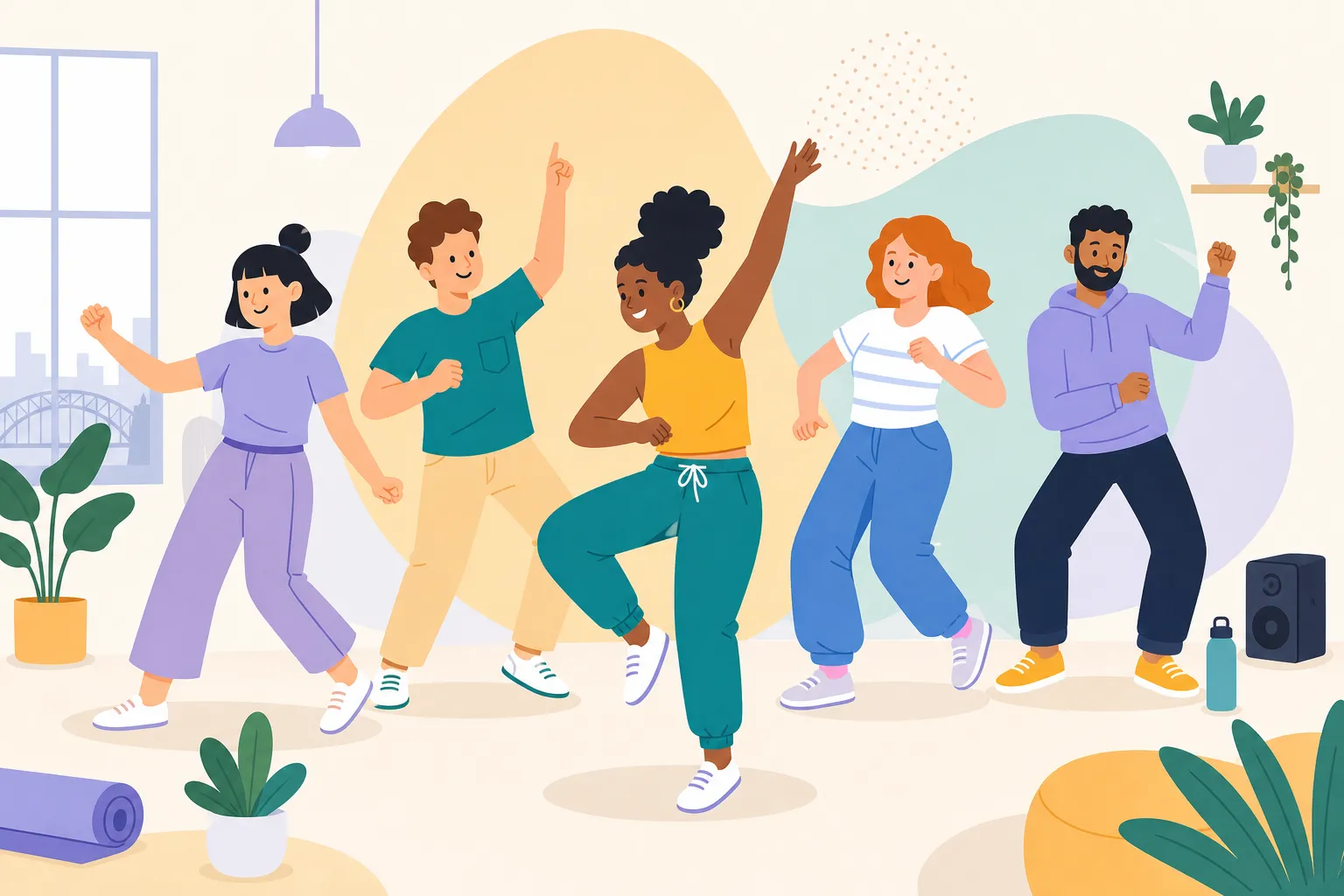
A dance workshop for work teams is structurally different. Everyone is on their feet. Everyone is attempting the same steps. And because no one comes into the room with a prior advantage, the social dynamic shifts almost immediately. For Sydney CBD businesses looking for something that actually lands, it’s worth knowing what a well-run studio session looks like, and what Salsa Suave Dance Studio offers corporate groups specifically: proper Latin dance instruction in a professional studio, led by an experienced instructor, with packages built for workplace teams. This guide walks you through everything you need to decide whether it suits your group, what the session involves, what it costs, and how to get one booked.
Why dance outperforms most team-building formats
What changes when everyone is a beginner
The most underrated element of a dance workshop for work teams isn’t the dancing. It’s the fact that no one in the room knows what they’re doing. The CFO is learning the same salsa step as the graduate who started three months ago. That shared vulnerability can meaningfully reduce perceived hierarchy and encourage more open interactions, something experienced providers consistently observe in workplace dance settings. This aligns with broader discussions of team-building dance activities and how movement-based formats change the group dynamic.
Dance also builds a type of awareness that transfers directly to the workplace. Following an instructor, reading a partner’s movement, adjusting your timing to match someone else’s rhythm: these are non-verbal communication skills. Research has found links between this kind of body language attunement and higher empathy and more effective collaboration; see the peer-reviewed study on dance and wellbeing for evidence connecting movement activities to mental health and social outcomes. Your team won’t think of it that way in the moment, but the skills are real.
The outcomes managers can actually report back on
Employers who’ve run corporate dance classes report a consistent set of outcomes: reduced stress through physical activity and endorphin release, stronger social bonds across team members who don’t normally interact, improved morale, and a more open attitude toward collaboration in the weeks that follow. Australian research, including the widely cited Medibank/PwC report on workplace mental health, points to a return of $2.50 for every $1 invested in staff mental health activities, and dance sits squarely in that category.
It’s also worth noting that even a single session can shift the social dynamic noticeably. Providers and participants frequently report short-term changes after a one-off workshop, though sustained behavioural change is more reliably observed across multi-session programmes. One 90-minute workshop where people laughed together, moved together, and walked away having achieved something small as a group can still change how a team interacts at the office on Monday morning.
What a dance workshop for work teams actually looks like
Formats, durations, and how sessions are structured
A typical corporate dance session runs between 60 and 120 minutes. It’s structured around four elements: a warm-up to get everyone moving without pressure, a technique segment covering the core steps, a short choreographed routine that ties it all together, and a cool-down. The result is that even participants who walked in claiming they “can’t dance” leave having completed something recognisable. That arc matters, because the sense of achievement is part of what drives the morale outcome.
Sessions can be designed as a one-off event or structured as a recurring programme for teams who want to build on what they’ve learnt. Timing is flexible: providers across Australia commonly offer team-building dance activities before work, during a lunch break, or as an after-hours event. The format adapts to whatever works for your team’s schedule.
Which styles suit workplace groups best
The dance styles most commonly offered for corporate settings include salsa, cha-cha, swing, line dancing, and hip-hop. Latin styles like salsa and cha-cha are particularly well suited to mixed-ability groups. The footwork is rhythmic and repetitive, the energy is social rather than performative, and a skilled instructor can scale the complexity in real time based on how the group is tracking. Line dancing works well for absolute beginners because it removes the partner dynamic entirely, allowing everyone to move as a group without the added coordination of working with another person.
At Salsa Suave Dance Studio, the available styles span salsa, bachata, and cha-cha-cha, all of which translate naturally into a corporate workshop setting. No partner is required, and no prior dance experience is assumed. The instructor meets the group where it is and builds from there.
Inclusive by design: handling mixed abilities and large groups
The most common concern managers raise is the person in the team who will resist. Every group has one: someone who insists they have two left feet, who’ll stand at the back with their arms crossed, who will make it their personality not to participate. A well-run workplace dance workshop is specifically designed to disarm that resistance. Movements can be modified for participants with injuries or physical limitations, the atmosphere is deliberately non-competitive, and the goal is enjoyment rather than performance. Experienced instructors who work with corporate groups are used to reluctant participants and know how to bring them along without making it awkward.
On the logistics side, most providers are comfortable with groups up to 35 participants in a single session. Once a group exceeds 25 people, a second instructor is typically required to maintain the quality of instruction and ensure safety. This is standard practice across the industry and should be factored into your initial booking conversation. Larger groups are entirely manageable; they just require a bit more planning around space and instructor ratios.
In-person studio, on-site, or virtual: matching the format to your team
Studio-based and on-site options for in-person teams
The two main in-person formats each suit different situations. Bringing your team to a professional studio delivers the full experience: purpose-built flooring (a sprung floor makes a genuine difference for comfort and safety), mirrors, a quality sound system, and an environment that signals “this is a real thing we’re doing.” That context shifts people’s mindset before the session even starts. For Sydney-based teams, Salsa Suave’s studio at 262 Pitt Street is centrally located near Town Hall Station, which makes it straightforward for staff commuting from across Greater Sydney without anyone needing to navigate parking. The studio is part of Sydney’s Leading Latin & Salsa Dance School, which focuses on accessible, social dance instruction.
On-site sessions bring the instructor to your office, a corporate venue, or an outdoor space. This option removes travel time and works well for large groups, but it does require adequate floor space. Australian guidelines recommend a minimum of six square metres per participant, with a sprung or cushioned non-slip surface preferred. Hard concrete floors are not suitable for dance movement over an extended period, so it’s worth checking your space before committing to an on-site format. Many providers outline their offerings for businesses on pages describing their corporate classes and on-site options.
Virtual dance classes for remote or hybrid teams
Virtual dance classes for teams connect a live instructor with participants via Zoom or a similar platform, guiding the group through the routine in real time. A practice recording is typically provided afterwards so participants can revisit the steps. From the logistics side, each participant needs a cleared space at home, a working camera, and a stable internet connection. Group dance classes for workplaces run virtually tend to last 90 to 120 minutes to account for the additional coordination involved.
Virtual works best when the team already has a strong remote culture and managers are comfortable with an informal, cameras-on format. If your team struggles with engagement on standard video calls, a virtual team-building dance workshop can actually help shift that pattern. The movement element changes the energy of the call in a way that a presentation or discussion simply cannot.
What a dance workshop for work teams costs in Australia
Studio-based sessions in Australia typically run at $25 to $30 per person. For on-site bookings, providers generally charge a flat rate: around $300 for a group of up to 15 participants with one instructor, scaling to $450 for larger groups. Sessions requiring two instructors (usually those with 16 or more participants) typically fall in the $450 to $650 range for a 60-minute session. Costs vary based on group size, duration, number of instructors, travel requirements, and whether you’re booking a one-off event or a recurring programme.
When assessing value, price is only part of the equation. The right provider for a workplace group offers corporate-specific packages rather than modified general classes, instructors who are experienced with non-dancers, clear communication about what’s included, and the flexibility to adjust the session to the group’s pace on the day. The best group dance classes for workplaces feel genuinely tailored. The team leaves feeling like the session was designed for them, not like they happened to share a class with a few colleagues.
How Sydney teams can book with Salsa Suave Dance Studio
Salsa Suave Dance Studio has extensive experience running Latin dance workshops for Sydney corporate groups and team events. The studio’s instructor brings specialist expertise across salsa, bachata, cha-cha-cha, and more, with a track record working with workplace groups at all levels of dance experience. The environment is designed to put non-dancers at ease from the moment they walk in: welcoming, non-intimidating, and set up for groups rather than individual performance.
The CBD studio location near Town Hall Station removes the logistical headache of getting a team to an unfamiliar suburb. Sessions run seven days a week, giving managers genuine flexibility to schedule outside of core business hours if that suits the team better.
Getting started is straightforward. Reach out to Corporate Teams | Salsa Suave with your group size, preferred date, and a sense of what you’re hoping the session achieves. The team will advise on the best style and format for the group’s experience level and they’ll confirm the structure, timing, and any logistics from there. No special preparation is required from participants: comfortable clothing, a willingness to move, and an open mind are all they need to bring. The studio also offers private and event-focused options, including Best Wedding Dance Lessons Sydney | Bridal Dance Lessons Sydney, if you need a related service for a special occasion.
Ready to give your team something worth talking about?
A dance workshop for work teams is not a gimmick. It’s a high-engagement activity with real, reportable outcomes around communication, morale, and social connection. It scales from small close-knit teams to large departments, it’s genuinely inclusive regardless of ability, and it’s flexible enough to run in a studio, on-site, or online. The activity works because it asks something of everyone in equal measure, and that shared experience creates something no whiteboard exercise or trivia night can replicate.
For Sydney-based businesses, the logistics are about as simple as they get. Salsa Suave Dance Studio is in the CBD, the booking process is direct and straightforward, and the instructors are experienced at turning a room full of reluctant non-dancers into a group that’s genuinely enjoying themselves. The hardest part is usually just deciding to try something different. Once the music starts, the rest takes care of itself. Get in touch with Salsa Suave to discuss your team’s next session.
 CALL US1300 724 442
EMAIL US info@salsasuave.com.au
VISIT US::
CALL US1300 724 442
EMAIL US info@salsasuave.com.au
VISIT US:: 
