

How to pull off a bridal party choreographed dance
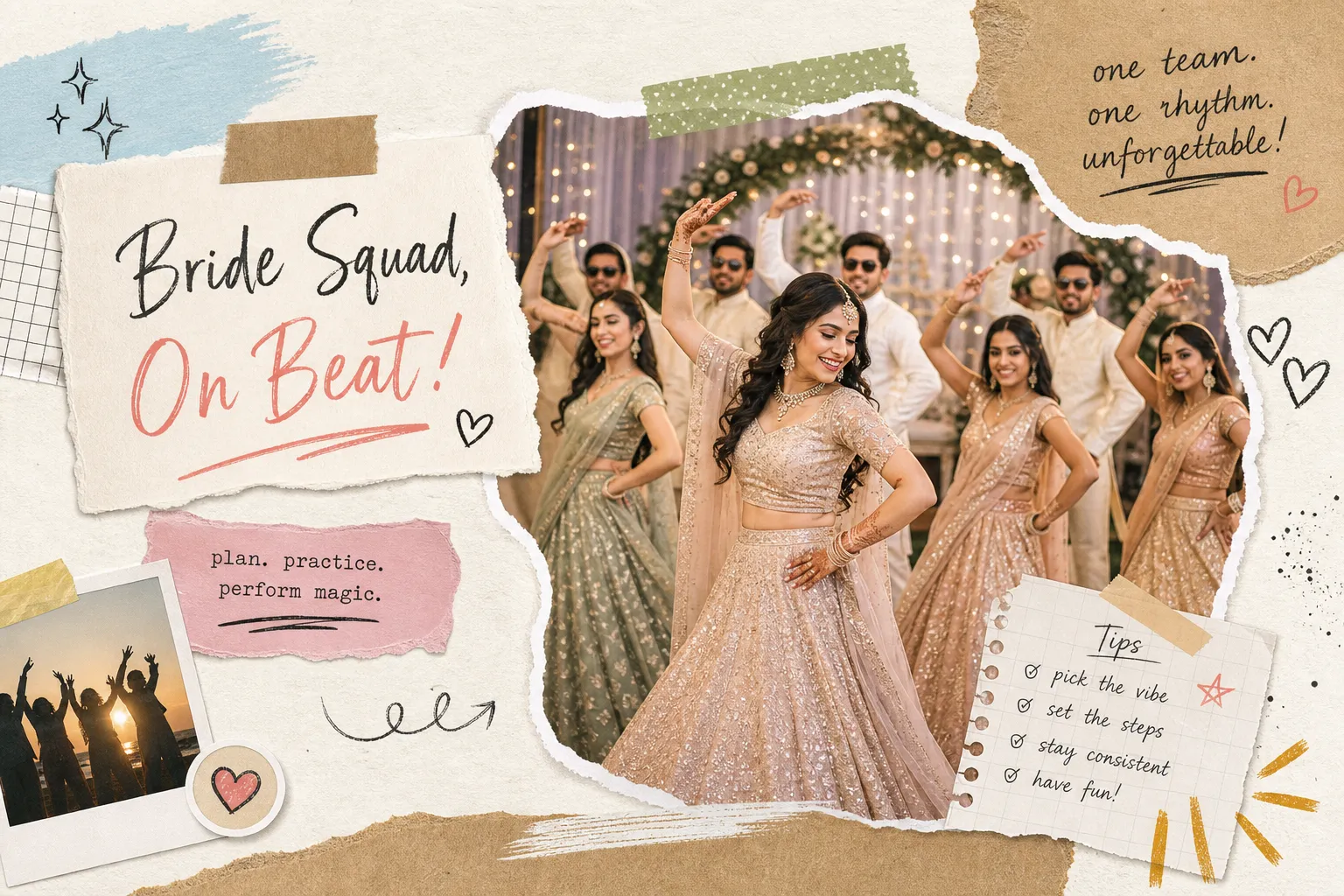
Picture the group chat. Someone, probably the most enthusiastic bridesmaid, sends a voice note at 11pm declaring that the bridal party absolutely must pull off a choreographed dance at the reception, a proper bridal party choreographed dance that has the whole room on their feet. There is a flurry of fire emojis. Then silence. Then someone quietly asks: “But… how do we actually do that?”
That moment of excited panic is exactly where this guide picks up. A bridal party choreographed dance is one of those ideas that sounds brilliant in theory and genuinely can be brilliant in practice. But it needs a clear plan, realistic expectations, and, most importantly, the courage to start before you feel ready. By the end of this article, you’ll know how to choose a style, pick a song, figure out how many rehearsals you actually need, and decide whether to DIY or hire a professional. Even if half your group hasn’t danced since the Year 10 formal, you’re going to be fine.
Choosing a dance style for your bridal party choreographed dance
Not all group wedding dances are created equal, and the first decision you’ll make is also the most important one. A line dance like the Cupid Shuffle or the Electric Slide is essentially self-directing: the song tells you what to do, and it requires almost zero preparation. A choreographed routine is a different commitment entirely. It involves a set sequence of moves that the group rehearses together and performs as a unit. Both are valid choices, but they call for very different levels of planning.
If you want something with genuine wow factor, a Latin-style routine is worth serious consideration. Salsa, bachata, and cha-cha-cha are popular choices for bridal-party choreography because the movements are expressive, fun to watch, and surprisingly learnable in a short time. The footwork for beginner-friendly Latin moves (a bachata side-step, a salsa basic, or a simple Cuban rumba pattern) is repetitive enough that non-dancers can get comfortable quickly. Bridal parties in Sydney have pulled this off beautifully by working with group Latin dance studios in the CBD that specialise in tailoring choreography to mixed-ability groups, including Salsa Suave Dance Studio, which offers this kind of personalised format.
The style also needs to match the tone of the reception. A polished ballroom setting suits something structured and elegant. A relaxed outdoor wedding can handle something playful and high-energy. The routine should feel like the bridal party having the best night of their lives, not a performance recital. When the style fits the people doing it, that joy is visible from across the room.
Picking a song that gets the whole room going
The best bridal party dance songs share a few things in common: they have universal appeal across different age groups, a tempo that’s danceable without being frantic, and a melody or lyric that guests already recognise. Repetitive song structures are your friend here. They’re easier to choreograph, easier for the dancers to memorise, and they give guests something to latch onto from the very first bar.
Consistently reliable choices include “Celebration” by Kool and the Gang, “Uptown Funk,” “We Are Family” by Sister Sledge, and “I Gotta Feeling” by the Black Eyed Peas. For an Australian crowd, John Paul Young’s “Love Is In The Air” lands beautifully and gives the whole room a warm, familiar moment. If you’re going with a Latin-style routine, an upbeat salsa track gives the choreography natural momentum and makes the group look like they know exactly what they’re doing, even when they’re still learning.
One practical note: most reception routines run 60 to 90 seconds, which means trimming your chosen song is almost always necessary. Under Australian copyright law, editing a recorded track creates a derivative work, which requires permission from the rights holders, typically managed through APRA AMCOS for performance rights and separately through the recording label. Ask your choreographer or DJ to handle the edit and confirm that licensing is covered before you book. A good choreographer will include music editing as part of their package, so check this upfront.
How many rehearsals does a bridal party choreographed dance actually need?
Here’s the honest answer: for a simple 60 to 90-second choreographed routine, most bridal parties need between three and five dedicated rehearsal sessions. Research from wedding choreography professionals suggests spacing these across seven to ten weeks before the wedding. This might sound like a lot, but each session is typically 60 to 90 minutes, and the spacing between sessions is what makes the choreography stick. Cramming it all into the week before the wedding is the single fastest way to ensure everyone looks panicked on the dance floor.
Group size matters too. In general, smaller groups of four to six people tend to feel performance-ready closer to the three-session end of that range, while groups of seven to twelve often need the full spread to work through spacing and timing. Coordinating 13 or more people requires the most rehearsal time, not because the steps are harder, but because getting that many bodies to hit the same beat at the same moment in space takes genuine repetition.
Structuring your rehearsal schedule
The ideal schedule looks something like this: start seven to ten weeks out, hold sessions every one to two weeks, and leave the final run-through for no later than two days before the wedding. This keeps the choreography fresh without anyone burning out from over-rehearsing. The goal in that last week is confidence, not perfection.
Keeping non-dancers confident and genuinely having fun
The biggest mistake bridal parties make is over-choreographing for the best dancer in the group. If your routine is designed to showcase the one person who did jazz classes for twelve years, everyone else will spend the performance trying to keep up rather than actually enjoying themselves. Build the routine around the least experienced dancer first. Once the core moves are solid for everyone, you can add optional flourishes for those who want them.
Simple footwork reads beautifully on camera and from across the room. A side-to-side step, a basic salsa timing pattern, or a single repeating sequence is genuinely more than enough to look polished and intentional. The moves that make guests gasp aren’t the hardest ones; they’re the ones everyone hits at exactly the same time.
How you run rehearsals matters just as much as what you rehearse. The sessions that produce the most confident performances are the ones that feel like a catch-up with friends who happen to be learning some moves together. Build in breaks, play the full song between run-throughs, and celebrate every small win. A laugh-filled rehearsal almost always produces a more natural, joyful performance on the day.
Teaching the routine in three or four short segments, rather than running the whole thing from the top each time, also helps enormously. Non-dancers absorb choreography far better in small chunks, with each section locked in before moving forward.
DIY vs. hiring a choreographer: what actually makes sense
There’s a version of the DIY approach that works: you find a YouTube tutorial, everyone watches it at home, you meet up a couple of times to run it together, and it comes together. That version requires a group that’s genuinely self-motivated, someone willing to take on the coordination role, and a routine that’s simple enough to teach yourself. If those three things are true for your group, go for it.
But a professional choreographer brings things that YouTube can’t. Beyond teaching the steps, they manage spatial arrangement, adjust the routine for different body types and abilities, edit the music to the right length, and provide written notes so the group can practise independently between sessions. For a bridal party with limited rehearsal time and a wide range of experience levels, this saves weeks of trial and error and a significant amount of pre-wedding stress.
In terms of cost, a single 90-minute group session with a wedding choreographer in Australia typically runs between $330 and $375, with full packages (including music editing and practice notes) ranging from $800 to $1,100. For a group of six or more, many choreographers offer discounted per-person rates. When you factor in that a studio environment also removes the headache of finding a suitable rehearsal space, the maths makes sense.
At Salsa Suave Dance Studio in the Sydney CBD, bridal parties can use the group Latin dance session format as a full pre-wedding bonding experience, not just a rehearsal. The studio is a short walk from Town Hall Station, and the team specialises in making mixed-ability groups look genuinely great on the dance floor. If you’re based in Sydney and want the guesswork taken out of the process, it’s worth reaching out early, demand builds significantly in the lead-up to wedding season.
A step-by-step plan from your first session to the wedding day
Seven to four weeks out (minimum): finalise the song, confirm the style, and book your choreographer or studio. Choreography professionals recommend starting at least seven to ten weeks out where possible, four weeks is a workable minimum for a simple routine, but the earlier you begin, the more relaxed each session will feel. Use the first rehearsal to learn the full sequence in segments, and leave with either written notes or a phone recording so everyone can practise at home before the next session.
Three to two weeks out: hold the next session focused entirely on timing, spacing, and transitions. This is the rehearsal where the routine goes from “we kind of know it” to “we actually look great.” Target the trouble spots specifically rather than running the full thing from the start repeatedly. Repetition of the parts you’ve already nailed wastes time; focused work on the weak sections transforms the whole routine.
The final week: do one gentle, full run-through no later than two days before the wedding. Keep it relaxed. The group has done the work and the choreography is in the body, they just need one last reminder to trust it. Remind everyone that the audience is entirely on their side. Guests aren’t watching with a scorecard; they’re watching with a drink in their hand, willing the whole thing to be brilliant.
The real reward isn’t the performance
A choreographed bridal party routine is far more achievable than it first appears, even for a group of self-described non-dancers. The ingredients are straightforward: a style that matches your group’s ability, a song with genuine energy, a short and repeatable bridesmaids dance routine, and enough lead time to rehearse without pressure. Aim for at least seven to ten weeks where possible, with four to six weeks as the minimum for a simple choreography for wedding party groups.
Here’s what nobody tells you before you start: the rehearsals become part of the wedding story just as much as the performance itself. The afternoon someone finally nailed the turn they’d been fumbling for two sessions. The group chat thread that pivoted from panic to genuine excitement. The 90 minutes where everyone forgot about seating charts and florals and just danced. That’s the real reward, and it starts the moment you commit to showing up.
If you’re in Sydney and want professional support to make it happen, reaching out to a dance studio early gives you the best possible shot at a bridal-entrance dance or group performance the whole party will genuinely enjoy. Salsa Suave Dance Studio at 262 Pitt Street, Sydney CBD is a great place to start that conversation, get in touch early to secure your spot before the wedding season calendar fills up.
 CALL US1300 724 442
EMAIL US info@salsasuave.com.au
VISIT US::

