

Types of Latin Dancing Explained for Complete Beginners
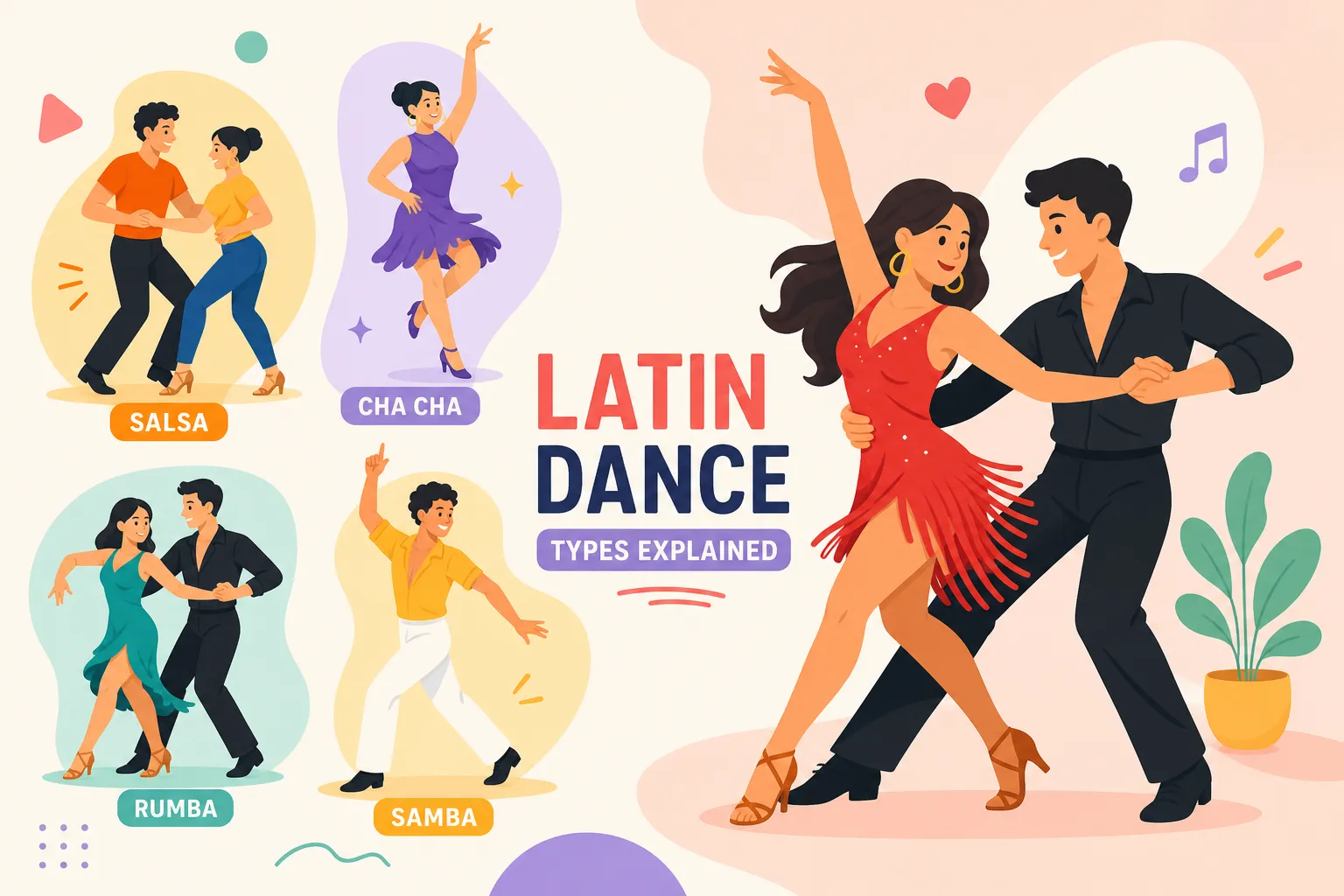
Walk into a Latin music event in Sydney for the first time and you’ll likely see a listing that includes salsa, bachata, merengue, mambo, cha-cha-cha, and maybe kizomba, all on the same night, with no explanation of what separates them. It’s a wall of names, and it’s genuinely confusing when you’re starting out. This guide covers the main types of Latin dancing so you can pick a starting point that actually matches what you want from dancing, without having to research five different schools or sit through the wrong class.
Knowing the difference between styles before you book your first class saves you from a common mistake: signing up for the wrong one and wondering why it doesn’t feel right. Studios like Salsa Suave Dance Studio in Sydney’s CBD teach across all the major Latin styles, which means you can explore several under one roof rather than piecing together a picture from multiple sources. By the end of this article, you’ll know what each main style feels like, what music drives it, and which one suits your actual goals.
Types of Latin Dancing: Social vs Ballroom
Most beginner confusion starts here. Social Latin and ballroom Latin share roots and overlap in music, but they exist in two fundamentally different worlds. Understanding which one appeals to you cuts your decision-making in half before you’ve even looked at specific styles.
Social Latin is improvised and partner-led. You learn it by dancing with real people in clubs, social evenings, and studio practice sessions. There’s no formal syllabus, no judging panel, and no “correct” way to express the music as long as your partner can follow what you’re doing. The goal is connection and enjoyment, not technical perfection.
What social Latin dancing actually looks like
On a social dance floor, you’ll see frequent open holds, partners separating and reconnecting, and a wide range of styling choices that reflect each dancer’s personality. The lead-and-follow framework is the only real structure: one dancer leads, the other follows, and the conversation between them creates the dance. The three types of Latin dancing that dominate this world are salsa, bachata, and merengue, and each one has its own character, music, and entry point for beginners.
How ballroom Latin differs in posture, rules, and purpose
Ballroom Latin, by contrast, is codified. Every dance has standardised footwork, hip action, and body mechanics that are assessed against a formal syllabus. In Australia, this is governed by DanceSport, and competitions use five specific International Latin dances: cha-cha-cha, rumba, samba, paso doble, and jive. The posture is more controlled, the partnership more structured, and the training more systematic. That structure also means a clearer progression path, which some dancers find motivating.
Types of Latin Dancing: Popular Social Styles
These three styles account for most of what you’ll encounter at Latin nights, social events, and beginner classes across Sydney. Learn to recognise them and you’ll already feel more at home on the dance floor.
Salsa: the most widely danced Latin style
Salsa grew out of Caribbean musical traditions and was shaped into its modern partner-dance form in New York City during the 1960s. The music is built around the clave, a rhythmic pattern that gives salsa its distinctive feel, layered with percussion, piano, bass, and brass. Tempo typically sits between 160 and 220 BPM, which gives it an energetic, forward-moving quality.
Beginners will encounter three main substyles. Cuban salsa (also called Casino) uses circular, rotational movement and is the most relaxed of the three. LA style is linear, danced on beat 1, and has a flashy, performance-oriented feel with lots of turn patterns. NY style is also linear but danced on beat 2, with a smoother, more music-driven character. All three share the same basic footwork concept, so starting with any one of them puts you in the broader salsa community.
Bachata: the easiest place to start
Bachata comes from the Dominican Republic, where it evolved from a local social music tradition into one of the most popular partner dances worldwide. The music is guitar-driven, with a requinto lead guitar sitting over rhythm guitars, bass, and percussion. At 118 to 136 BPM, it moves noticeably slower than salsa, and that slower tempo is exactly why it works so well for beginners: you have more time to feel the lead and respond to it.
Australian studios typically teach two main bachata approaches. Dominican bachata is footwork-focused and playful, danced close to the music’s traditional rhythmic feel. Sensual bachata shifts the emphasis to body waves, torso isolations, and close partner connection, interpreting the music more expressively than rhythmically. Starting with Dominican bachata gives you a solid technical foundation before adding the body movement layer.
Merengue: the most forgiving rhythm
Merengue is a Dominican dance built around a simple marching-step basic and a driving 2/4 pulse, typically between 120 and 160 BPM. The footwork is genuinely straightforward: you step side to side with a small hip action, matching each beat of the music. That simplicity makes it widely regarded as the most accessible Latin dance for someone with zero prior experience. Merengue’s uncomplicated basic step and steady rhythm often help absolute beginners feel floor-ready more quickly than more rhythmically complex styles.
Latin styles with more technical depth
Once the lead-and-follow concept clicks and basic timing feels natural, several other Latin dance styles become well worth exploring. These ones sit across both the social and ballroom worlds, and both pay dividends once the basics are solid.
Mambo and cha-cha-cha: cousins from the same era
Mambo developed from Cuban dance traditions and became a staple of Latin nightlife in the mid-20th century. It had a direct influence on the development of salsa, so the two share a lot of movement vocabulary. Cha-cha-cha grew directly from mambo, adding a distinctive triple-step that gives it its characteristic crisp, rhythmic feel. At around 120 to 128 BPM, cha-cha is brisk without being overwhelming, and because it’s one of the five International Latin dances, it bridges the social and competition worlds. If you already have basic salsa footwork, cha-cha-cha is a natural and satisfying next step.
Rumba and samba: the emotional and physical extremes
Rumba is rooted in Afro-Cuban musical traditions and is danced at around 100 to 120 BPM, making it the slowest and most emotionally expressive of the International Latin dances. The slower tempo demands control, and that’s what makes it both challenging and deeply satisfying for more experienced social dancers who want to say something with their movement rather than just execute patterns.
Samba sits at the other end of the spectrum. Afro-Brazilian in origin and typically around 96 to 104 BPM in ballroom practice, samba is physically demanding with a buoyant, bouncing quality that requires real body coordination to execute well. Both rumba and samba are core International Latin competition dances, and both take considerably longer to feel natural than salsa or bachata. They’re worth the investment, but they’re not where most beginners should start.
Which type of Latin dancing suits your goals?
Knowing the styles is only useful if it leads to a decision. Here’s a practical framework based on three common beginner profiles.
If your goal is social dancing and Latin nightlife
Start with salsa as your primary target and add bachata as a natural companion. Many Latin nights in Sydney programme both styles throughout the evening, so knowing both gives you confidence for the majority of the night. If salsa’s tempo feels overwhelming at first, spend a few sessions on merengue as a confidence-builder. It gets you comfortable with partner connection and basic floor navigation, which makes the step up to salsa much less daunting.
If you want to compete or perform
Cha-cha-cha is widely recommended as a beginner entry point into ballroom Latin, with rumba commonly introduced alongside it in many Australian DanceSport syllabuses. Both build the timing and body awareness that feed naturally into samba, paso doble, and jive, which form the rest of the International Latin set used in DanceSport competitions across Australia. Start with cha-cha, add rumba, and the rest of the set becomes progressively more accessible.
If you are a complete beginner with no dance experience
Start with bachata or merengue. Bachata’s slower tempo gives you time to understand lead-and-follow without feeling rushed, and merengue’s simple basic removes the timing complexity almost entirely. Once the fundamental partnership concept feels natural, move into salsa. It’s worth checking your studio’s syllabus before attempting samba or paso doble, both can be more technically demanding for beginners, and starting them before the foundations are in place tends to create frustration rather than progress.
How to start learning Latin dancing in Sydney
Knowing which style to learn is step one. Finding the right environment to learn it is step two, and that decision matters more than most beginners expect.
What makes a Latin dance class worth your time
The most important factor is whether the instructor actually teaches the specific style you want. Beyond that, the format matters. Private lessons let you move at your own pace, which is particularly valuable in the early stages when confidence is still fragile and you don’t want to feel behind a group. Group classes offer a social environment and expose you to different partners, which accelerates adaptability. The ideal setup includes both options under one roof so you can mix them as your learning evolves.
Why learning multiple styles under one roof works better
Salsa, bachata, and cha-cha-cha share enough foundational movement vocabulary that learning them in sequence under one instructor is genuinely faster than switching schools between styles. The transitions between styles reinforce each other rather than creating confusion.
Salsa Suave Dance Studio in Sydney’s CBD teaches all the major Latin styles under one roof, with private and group lesson options available for beginners through to advanced dancers. The studio is centrally located near Town Hall Station, making it practical for anyone coming from across Greater Sydney. For details on current timetables, pricing, and lesson formats, visit salsasuave.com.au.
Choosing your starting point
You now have a clear overview of the main types of Latin dancing. Social Latin, led by salsa, bachata, and merengue, is where most beginners should start. Ballroom Latin, anchored by cha-cha-cha and rumba, is the path for those drawn to competition or performance. Mambo is a rewarding social exploration once salsa feels comfortable; samba and paso doble open up in a meaningful way once rumba is underway. And for Wedding Dance Lessons checkout Suave Dance Studio as well.
The single best thing you can do with this information is pick one style and book a lesson. Not two styles. Not a research session on YouTube. One style, one lesson, and you’ll find your way forward far more quickly on the dance floor than from the other side of a screen. If you’re in Sydney and want to explore the different types of Latin dancing with an experienced instructor, Salsa Suave Dance Studio is the practical next step.
 CALL US1300 724 442
EMAIL US info@salsasuave.com.au
VISIT US::

