

Choosing a Dance Studio in Sydney: A Practical Checklist
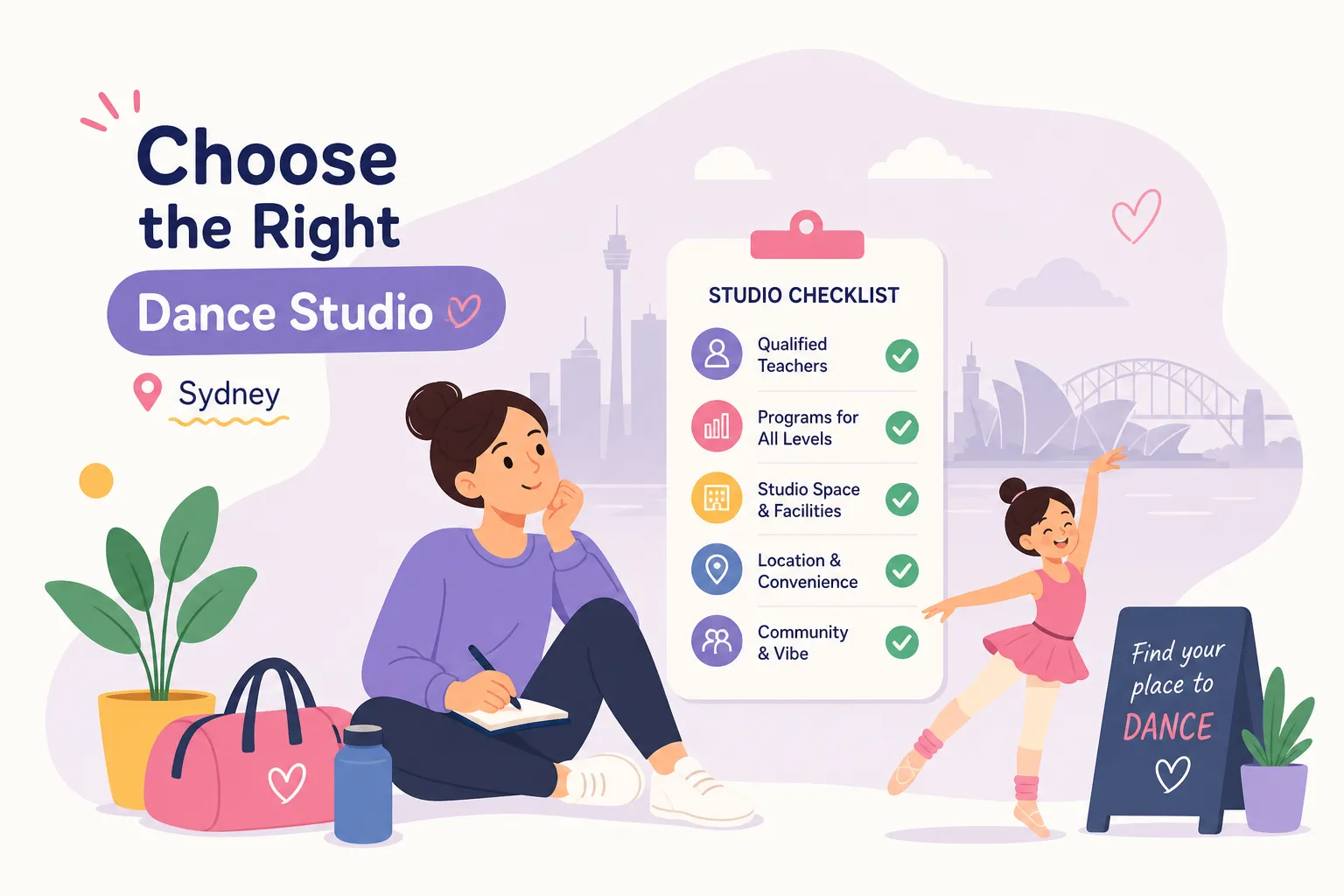
Choosing a dance studio can feel surprisingly difficult, even after you’ve done the research. You’ve opened three or four tabs, scrolled through Instagram feeds full of happy dancers, and read enough “About Us” pages to feel like you know these people. And yet somehow you’re still not sure which studio is worth your time, your money, or your Thursday evenings. Sound familiar?
That uncertainty is a commonly reported reason people delay starting dance lessons for months, sometimes years. Not because they lack enthusiasm, but because all studios look equally polished online, and nobody tells you what to actually look for before you sign up. A great website and a charismatic instructor bio are easy to produce. What they don’t show you is whether the schedule fits your life, whether the pricing is genuinely transparent, or whether you’ll still be walking through the door six months from now.
This checklist is built to fix that. It’s the same set of questions we use at Salsa Suave Dance Studio , where we’ve been teaching Latin dance in the Sydney CBD for over 20 years. Run any studio through these criteria before you commit, and the decision becomes significantly clearer. By the end of this article, you’ll know exactly what to look for, what to ask, and how to spot a studio that’s genuinely worth your investment.
1. Check the instructor’s credentials before anything else
In Australia, the recognised minimum vocational benchmark for dance teaching is the Certificate IV in Dance Teaching and Management (CUA40320), delivered through registered training organisations like ATOD. Some instructors also carry syllabus-specific registration through bodies like the Royal Academy of Dance, particularly for classical styles. These credentials matter because they reflect structured training in pedagogy, anatomy, and safe progression, not just years spent on a stage.
This isn’t about quizzing your prospective teacher at the front desk. It’s about understanding what baseline of professional training you should reasonably expect before handing over your credit card details. A teacher with a strong performance career but no formal teaching qualification is not the same as one who has trained specifically to instruct others. Both can be good teachers, but knowing the difference helps you ask smarter questions.
Beyond formal credentials, a teacher’s depth of specialist experience tells you a great deal. Fernando Providel, principal instructor at Salsa Suave Dance Studio, brings more than 20 years of specialist Latin dance teaching to every lesson. That kind of accumulated knowledge shapes how technique is built and refined over time, not merely how steps are copied. The questions worth asking any instructor are simple: How long have you been teaching, rather than performing? Do you teach all styles yourself, or do you bring in others for certain classes? Can you describe how a beginner progresses through your programme? The answers will tell you far more than a biography ever could.
2. Choosing a dance studio: how flexible are the classes, really?
Group classes and private lessons are genuinely different experiences, and the distinction matters more than most beginners realise. Group classes suit people who enjoy learning in a social environment and who have enough flexibility to attend at a fixed time each week. Private lessons move faster, build technique more precisely, and accommodate your schedule rather than asking you to fit into one. If you’ve ever quietly dropped out of a gym membership because Tuesday at 7pm stopped working, you’ll understand why this matters.
Salsa Suave offers both options, with private lessons bookable seven days a week to suit a wide range of schedules. That kind of availability is designed around how Sydney adults actually live, around work commitments, family responsibilities, and timetables that rarely cooperate with a single fixed timeslot. When you’re evaluating any studio, ask specifically about booking flexibility: Can you reschedule if something comes up? Is there a make-up policy for missed classes? Can you join at any point, or do you have to wait for the next term intake? These questions sound minor until the answer costs you three weeks of progress.
Also look at the lesson package structures critically. A studio that only offers one format at one price point may not be building its programme around student needs. Genuine flexibility shows up in the options available, whether that’s a casual single lesson to try things out or a longer-term package for someone ready to commit to real progress. It’s also worth asking whether the studio caters to different learning goals, recreational enjoyment versus more structured, performance-focused progression, since this will shape everything from the class format to the teaching style.
3. Location and accessibility when choosing a dance studio
Most people evaluate a studio’s location once. They Google the address, think “that’s not too far,” and move on. What they don’t account for is how that commute feels after a long day at work, in the rain, on a Tuesday in July. Many studios people stop attending aren’t ones with bad teaching, they’re the ones that were just inconvenient enough to skip when motivation dipped.
Salsa Suave Dance Studio is located at 262 Pitt Street in the Sydney CBD, one block from Town Hall Station and within easy reach of Metro Gadigal Station. For commuters coming in from Surry Hills, Newtown, the Eastern Suburbs, or the North Shore, that kind of central, transport-accessible location removes one of the most reliable reasons people quietly stop showing up. Proximity to public transport is not a bonus feature; it’s one of the most practical factors in long-term consistency.
When you visit a studio in person before enrolling, pay attention to a few practical details beyond the dancing. Is there somewhere safe and comfortable to wait before or after your class? Does the building feel secure at the times you’d normally attend? Is the space clean and properly kept? These observations take less than ten minutes but tell you a lot about how the business is run day-to-day.
4. Pricing transparency and what the fees actually cover
A low headline price is not always a good deal. Some studios advertise an attractive per-class rate but charge separately for enrolment fees, examination entry, costumes, and performance costs. As a rough benchmark, a single 45-minute weekly class at Australian dance studios typically runs anywhere from $130 to $190 per term, and exam-focused programmes can add hundreds more on top before the year is out. The key is learning to compare pricing on a like-for-like basis, rather than reacting to whichever figure appears most prominently on the website.
For private Latin dance lessons in the Sydney CBD, the typical market rate in 2026 sits between $120 and $140 per single session. Salsa Suave’s pricing reflects this honestly, with a single lesson at $140 and packages ranging from there up to a 50-lesson Ultimate Package at $4,950, with flexible options in between. One feature worth noting is the partner pricing structure: two people can attend for the cost of one package, which effectively halves the per-person cost for couples learning together. That’s not a small detail when you’re comparing value across studios.
Before you commit to any package, ask the studio three direct questions: What exactly is included in this price? What are the cancellation or transfer terms if your circumstances change? Is there a trial lesson available before I purchase? A studio confident in its product will welcome these questions. One that dodges them is telling you something useful.
5. Studio atmosphere and safety policies matter more than the website suggests
The atmosphere of a studio is almost impossible to assess from a website, and it’s one of the most important things to experience in person. A genuinely welcoming studio is energetic without being intimidating, and structured without feeling rigid. A complete beginner should be able to walk through the door for the first time without immediately feeling like they’ve wandered into the wrong room. Watch how staff greet new visitors. Listen to how current students talk about their experience. Notice whether the space feels inclusive across different ages and ability levels. These observations take minutes and reveal far more than any review page.
Safety policies are a separate and equally important consideration. Reputable studios require instructors to hold a current First Aid certificate and, where applicable, a valid Working With Children Check. They conduct regular facility safety checks, maintain floors that are clean and in good condition (sprung or Marley surfaces are widely recommended for injury prevention), and have documented emergency procedures. These aren’t bureaucratic box-ticking exercises; they’re signals of a professionally run operation.
Don’t be shy about asking directly. Request proof of staff first aid certifications and ask whether safety incident procedures are documented. A well-run studio will answer these questions without hesitation, and if the response is vague or defensive, treat that as a meaningful data point.
6. Book a trial class before you make any commitment
A trial class is not simply about whether you enjoy the style. It’s an opportunity to observe how the instructor communicates with students at different levels, whether the pacing feels appropriate for where you are right now, and whether you leave the session feeling encouraged rather than deflated. It also lets you assess whether the class environment matches what the studio described online, something no amount of prior research can replicate.
During your trial, pay attention to how corrections are delivered. A good instructor gives specific, constructive feedback without making students feel self-conscious. Watch the warm-up: it should be purposeful and appropriate for the style, not an afterthought. Notice whether you feel seen as an individual or processed as part of a crowd, since these details accumulate quickly into a clear overall impression.
After visiting two or three studios, a simple comparison framework helps cut through the emotional blur of the experience. Rate each one across the five criteria covered in this article: instructor credentials, scheduling flexibility, location, pricing transparency, and atmosphere. The studio that scores consistently across all five, rather than brilliantly on one or two and poorly on the rest, is the one worth committing to.
If you’re looking for a practical starting point, Salsa Suave Dance Studio offers trial lessons seven days a week at our CBD location, making it easy to fit a first visit into your schedule without rearranging your week.
Make the decision with confidence
Choosing a dance studio isn’t about finding the most impressive website or the cheapest casual class rate. It’s about finding a place where you’ll actually show up, week after week, and genuinely enjoy the process of learning something new. That takes more than good marketing. It takes qualified teaching, a schedule that works for your life, a location you’ll travel to without dreading it, and pricing you can understand, all wrapped in an environment that makes you feel welcome from the very first lesson.
Run any studio through this checklist before you sign up, and you’ll move from overwhelmed to genuinely informed. The decision becomes clearer because you’re comparing the right things rather than reacting to whoever has the prettiest photos.
If you’re in Sydney and ready to find out what 20-plus years of specialist Latin dance instruction actually feels like in practice, Salsa Suave Dance Studio is at 262 Pitt Street in the CBD, one block from Town Hall Station, open seven days a week. Book a first lesson or reach out with any questions, we’ll help you figure out exactly where to start.
 CALL US1300 724 442
EMAIL US info@salsasuave.com.au
VISIT US::
CALL US1300 724 442
EMAIL US info@salsasuave.com.au
VISIT US:: 
